Posts Tagged “ Psychology ”

Written by Gabriela Segura, MD
Thursday, 18 September 2008 17:28

Imagine a world in which three to four million people are suddenly struck by a serious, recurring illness. There is chronic pain, trauma and injury. Authorities fail to draw any connection between individual bouts with the disease and the greater public threat. Many suffer in silence” -Joseph R. Biden, former chairman of the US Senate Judiciary Committee describing his own country, the United States of America; the “disease” is domestic violence.

It has been roughly estimated that 1 woman in 3 has been beaten, forced into sex, or otherwise abused in her lifetime around the globe. The implications of this are insurmountable, after all women are representatives of creative principles. Recently in the news, there has been a an article that barely touches the tip of the iceberg of this problematic.

Read more…

Written by Gabriela Segura, MD
Monday, 15 September 2008 16:56

One thing that never ceases to amaze me is the lack of general psychological knowledge in the medical profession. When you are aiding in the healing process of a person, it is essential to have a handle on basic psychology, even if it is by self-education. It can be quite dehumanizing to focus on a medical career from the pathological-body point of view. For instance, consider a person that has been severely injured after a car accident. All the patient’s injuries are surgically correctable, and he can be brought back to normal health through physiotherapy and the like, so he is considered “fixed” and can continue with his life as if nothing happened… But not quite, as we can see today in the news:

Read more…

Written by Gabriela Segura, MD
Monday, 9 June 2008 09:27

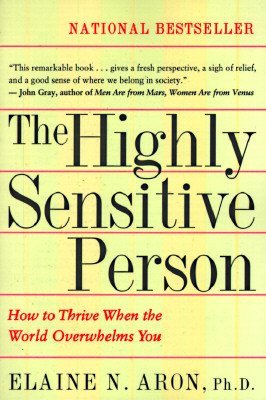
The Highly Sensitive Person by Elaine Aron was published nearly 10 years ago and it has changed the life of thousands of readers. Just imagine, a highly sensitive person (HSP) may think of herself or himself as an inborn introvert, neurotic or shy person, or as if she or he has some sort of problem and when a non-HSP psychologist or even when the average non-HSP person describes sensitive individuals according how they “look like”, they usually describe them wrongly as introverts, shy people, timid, neurotics, etc. But this is not necessarily true for the HSP and actually, some non-HSP can be described that way too.

What happens is that a person has a sensitive nervous system, this can probably be inherited and it actually occurs in about 15-20% of the population. What this means is that a HSP is more aware of subtleties in the environment and it also means that they are understanding and aware. Most people have these qualities, but HSP may observe more subtle nuances, specially when they feel good, calm and alert. Elaine Aron describes this observance of the subtle like this:

“This greater awareness of the subtle tends to make you more intuitive, which simply means picking up and working through information in a semiconscious or unconscious way. The result is that you often “just know” without realizing how. You “just know” how things got to be the way they are of how they are going to turn out.”

Read more…

Written by Gabriela Segura, MD
Sunday, 4 May 2008 20:15

Background

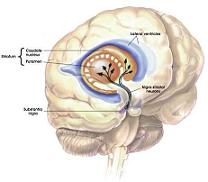
Parkinson’s disease (PD) is the most common serious movement disorder in the world, affecting about 1% of adults older than 55 years. It represents the most common example of a family of neurodegenerative disorders characterized by variable degrees of “parkinsonism” which is defined as a paucity and slowness of movement (bradykinesia), tremor at rest, rigidity, shuffling gait, and flexed posture. Parkinsonism results from a reduction of dopaminergic transmission within the basal ganglia.

Read more…