Posts Tagged “ Psychology ”

Written by Gabriela Segura, MD
Tuesday, 20 July 2010 11:04

A new study from the University of Chicago shows that a foreign accent undermines a person’s credibility in ways that the speaker and the listener don’t consciously realize.

“The results have important implications for how people perceive non-native speakers of a language, particularly as mobility increases in the modern world, leading millions of people to be non-native speakers of the language they use daily,” said Boaz Keysar, a Professor of Psychology at the University of Chicago and an expert on communication.

“Accent might reduce the credibility of non-native job seekers, eyewitnesses, reporters or people taking calls in foreign call centers,” said Shiri Lev-Ari, lead author of “Why Don’t We Believe Non-native Speakers? The Influence of Accent on Credibility,” written with Keysar and published in the current issue of the Journal of Experimental Social Psychology.

But on the other hand, I wouldn’t be surprised if there might be countries where foreign accents can make speakers seem more truthful to listeners. I can think of a few countries where being a foreigner is a plus, that is, a European or North American foreigner! One has to take into account cultural beliefs and brainwashing propaganda against or pro all things foreign. It is interesting and very telling of how much can slip our conscious awareness. I am also reminded of the following study from Blink by Malcolm Gladwell:

Blink in Black and White

Over  the past  few years, a number of psychologists have begun  to  look more closely at  the  role these kinds of unconscious—or, as they like to call them, implicit—associations play in our beliefs and behavior, and much of their work  has  focused  on  a  very  fascinating  tool  called  the  Implicit Association  Test  (IAT). The  IAT was devised  by  Anthony  G.  Greenwald,  Mahzarin  Banaji,  and  Brian  Nosek,  and it is based on a seemingly obvious—but  nonetheless  quite  profound—observation. We  make  connections much more  quickly  between pairs of  ideas that are already related  in our minds than we do between pairs of ideas that are unfamiliar to us. What does  that mean? Let me give you an example. Below  is a  list of words. Take a pencil or pen and assign each name  to  the category  to which  it belongs by putting a check mark either  to  the  left or  to  the  right of  the word. You can also do it by tapping your finger  in the appropriate column. Do it as quickly as you can. Don’t skip over words. And don’t worry if you make any mistakes.

Read more…

Written by Gabriela Segura, MD
Sunday, 18 July 2010 03:47

The 1956 film “The Bad Seed.”

“I know now, so there’s no sense in lying any more,” said Mrs. Penmark to her daughter Rhoda. “You hit him with the shoe: that’s how those half-moon marks got on his forehead and hands.”

Rhoda moved off slowly, an expression of patient bafflement in her eyes; then, throwing herself on the sofa, she buried her face in a pillow and wept plaintively, peering up at her mother through her laced fingers. But the performance was not at all convincing, and Christine looked back at her child with a new, dispassionate interest, and thought, “She’s an amateur so far; but she’s improving day by day. She’s perfecting her act. In a few years, her act won’t seem corny at all.It’ll be most convincing then, I’m sure.” -William March, The Bad Seed.

Psychologist Robert Hare is devoted to the study of psychopathy. His research may upset a lot of people because until the psychopath came into focus, it was possible to believe that bad people were just good people with bad parents or childhood trauma. But Hare’s research suggested that some people behaved badly even when there had been no early trauma nor bad parenting. Moreover, since psychopaths’ brains are in fundamental ways different from ours, talking them into being like us might not be easy. Indeed, to this day, no one has found a way to do so (more information at hare.org).

For to many people the very idea of psychopathy in childhood is inconceivable. [...] Many people feel uncomfortable applying the term psychopath to children. They cite ethical and practical problems with pinning what amounts to a pejorative label on a youngster. But clinical experience and empirical research clearly indicate that the raw materials of the disorder can and do exist in children. Psychopathy does not suddenly spring, unannounced, into existence into adulthood. [...]

Clinical and anecdotal evidence indicates that most parents of children later diagnosed as psychopaths were painfully aware that something was seriously wrong even before the child started school. Although all children begin their development unrestrained by social boundaries, certain children remain stubbornly immune to socializing pressures. They are inexplicably “different” from normal children – more difficult, willful, aggressive, and deceitful; harder to “relate to” or get close to; less she puts on her sweet and contrite act we’re generally tormented by her behavior. She’s truant, sexually active, and always trying to steal money from my purse.”  – Robert Hare, Without Conscience: The Disturbing World of the Psychopaths Among Us

Dr. Richard A. Friedman is a professor of psychiatry at Weill Cornell Medical College in Manhattan. He recently wrote this article which is also food for thought:

Accepting That Good Parents May Plant Bad Seeds

Richard A. Friedman, M.D.
NYTimes.com
July 12, 2010

Gracia Lam

Gracia Lam

“I don’t know what I’ve done wrong,” the patient told me.

She was an intelligent and articulate woman in her early 40s who came to see me for depression and anxiety. In discussing the stresses she faced, it was clear that her teenage son had been front and center for many years.

When he was growing up, she explained, he fought frequently with other children, had few close friends, and had a reputation for being mean. She always hoped he would change, but now that he was almost 17, she had a sinking feeling. Read more…

Written by Gabriela Segura, MD
Saturday, 17 July 2010 04:40

The StormI found an article today, which discusses a link between certain types of families and behavioral problems in school: Behavior Problems in School Linked to Two Types of Families.

“Families can be a support and resource for children as they enter school, or they can be a source of stress, distraction, and maladaptive behavior,” says Melissa Sturge-Apple, the lead researcher on the paper and an assistant professor of psychology at the University of Rochester.

“This study shows that cold and controlling family environments are linked to a growing cascade of difficulties for children in their first three years of school, from aggressive and disruptive behavior to depression and alienation,” Sturge-Apple explains. “The study also finds that children from families marked by high levels of conflict and intrusive parenting increasingly struggle with anxiety and social withdrawal as they navigate their early school years.”

The three-year study, published July 15 in Child Development, examines relationship patterns in 234 families with six-year-old children.

But for a wider and in-depth perspective on this problem, one must read The Narcissistic Family by Stephanie Donaldson-Pressman and Robert M. Pressman. The authors describe a “parent system” which is primarily involved in getting its own needs met, therefore taking precedence over the “child system.” Children born into these families try to earn love, attention and approval by satisfying their parents’ needs. Never getting their own feelings validated, these children will then have problems which will further contribute to the narcissistic family system.

The symptoms of this narcissistic wounding are often a chronic need to please; an inability to identify feelings, wants, and needs; and a need for constant validation. From the book: Read more…

Written by Gabriela Segura, MD
Saturday, 18 April 2009 18:27

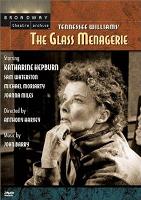
Looking for something to watch during my far infrared sauna session, I stumbled upon The Glass Menagerie, based on Tennessee Williams’s play. I suddenly remembered that this play was referenced in Barbara Hort’s book, Unholy Hungers, in the context of the feminine vampire archetype. Although the label “vampire” may sound too drastic, it is actually very appropriate because the book is basically about psychic feeding dynamics. After watching the movie, I felt compelled to review what was said in the book about the female vampire archetype. The book is probably one of the best psychology books I’ve ever came across with, so I’ll include the relevant quote here related to the movie as food for thought:
The vampire in Williams’s autobiographical work is Amanda Wingfield, a fading Southern belle whose husband has left her alone to raise their two children-the discontented dreamer, Tom, and Laura, his crippled, reclusive sister. Although Amanda devotes most of her energy to feeding on the resistant Tom, she achieves her greatest vampiric success with Laura. Bled to the point of transparency by her mother, Laura drifts through each day by playing with her glass menagerie, the little crystal animals that are as fragile and as translucent as Laura become in the grip of Amanda’s vampiric “love.”

Amanda clearly operates under her vampiric veil of vulnerability when she confronts Laura with her truancy from the secretarial school in which Amanda has forcibly enrolled her: [Amanda leans against the shut door and stares at Laura with a martyred look.]

Read more…

Written by Gabriela Segura, MD
Monday, 9 March 2009 18:11

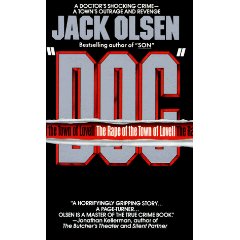
I walked into a bookstore of a small Canadian town in 2005 and asked for a true crime story where a doctor was involved. I thought that perhaps it would help me to understand better pathological personalities and how insidious they are in our society, including the medical community. A few seconds later the guy brought me, Doc: The Rape of the Town of Lovell by Jack Olsen, which won the 1990 Edgar Award for Best Fact Crime.

It took me other 4 years before I read the book, but I’m SO glad I finally did. It turned out to be most instructive regarding the insidiousness, subtleness and evilness of psychopathy. Jack Olsen knew about psychopathy which makes this true crime novel even more interesting. In fact he quotes The Mask of Sanity by Hervey Cleckley, M.D., an authority reference book of psychopathy in the fields of psychiatry and psychology. Olsen is able to give an incredible insight about how Dr. John Story, the psychopath doctor, raped numerous women in the town of Lovell in Wyoming for over 25 years without anybody doing anything about it. And even when some people knew about Dr. Story’s behavior (including hundreds or even thousands of victims), they only helped to conceal his behavior with their religious and societal programming.

Lovell is a small town in Wyoming whose population is about 50% Mormon. The victims were very religious and most of them consider themselves property of men, or the Church. Dr. John Story established his medical practice in Lovell in 1958 and he raped his victims while doing pelvic exams. The doctor, who was a pillar of the Baptist Church, enjoyed enormous prestige and support.

Read more…

Written by Gabriela Segura, MD
Saturday, 28 February 2009 23:56

As I mentioned yesterday, the misuse of anger can be hazardous to your health, but it can also have disproportionate consequences for those people around you. An example of this last case might be Killing in Small Town which I saw recently. The movie is about a brutal ax murder where the killer strikes her victim 41 times. The murderer is a reserved woman who repressed her anger in such a way that when she got angry, she surely lost control! As I previously said, angry responses very seldom reach uncontrollable levels and when they do, they are usually because of misuse of angry feelings that have little or nothing to do with the immediate actual irritating situation, for example unconscious anger rooted in the past or in someone else. In general, the greater the awareness of how we really feel, the less chance there is to lose control. And needless to say, the murderer in this movie is so unaware of her anger, that it becomes impossible for her to have control once she explodes. In the movie (spoiler warning…) the anger was triggered by a childhood memory where she was hit in the head and also because her victim was trying to kill her in the first place!

The personality of this anger-repressed woman reminded me of what Theodore Rubin, M.D. explains in The Angry Book about cooling off our anger, whether it is due to childhood trauma, survival, or to sustain illusions of our ourselves about never getting angry:

Read more…

Written by Gabriela Segura, MD
Saturday, 28 February 2009 12:44

Dissociation is a learned program which “protects” us from a cruel environment; like a trip to the moon which buffers us from an uncomfortable reality. Moments of stress reminds us of bad times during our childhoods and makes us dissociate from our surroundings.

Dissociation may take many forms, some people get tough and repressed, others are shy, others are paranoid and afraid, others are upset and cranky, still others are dreaming awake, etc, etc. A person is absent from him or herself all the while he or she is “unconscious” of their actions. Some people don’t have a conscious memory of what they did during the moment of dissociation. Others do have the memory or they remember retrospectively, but they have the sensation that they were out of control and when the stress trigger event is no longer present, or when the old wounds are not poked any longer, they come back to their senses and become more conscious of their acts.

Myth of Sanity by Martha Stout is an excellent book about the subject. The author knows hundreds of survivors of childhood or adulthood trauma as a therapist. She describes with eloquence the “myth of sanity” which everybody can relate to because after all, we all dissociate to one extent or another, so we all are a bit “crazy”.

Read more…

Written by Gabriela Segura, MD
Tuesday, 10 February 2009 17:04

Omega-3 fats, eicosapentanoic acid (EPA)and docosahexanenoic acid (DHA), are essential for our brain and body function. They are extremely helpful for preventing heart disease, psychiatric and neurological conditions, cancer, immune deficiencies, and eczema among others. 60% of the brain consists of DHA and if there is a lack, your brain can’t function. These fats are essential for growth and overall health of blood vessels and nerves. They also help heal inflammation and promote numerous cellular activities. A deficiency of these fats is strongly associated with ADHD, depression, anxiety, bipolar disease, autism, learning disabilities, dementia, etc. So it must not come as a surprise this recent article about omega-3 fats benefits in menopausal women:

Read more…

Written by Gabriela Segura, MD
Monday, 9 February 2009 21:11

One of my most interesting readings as of lately is Where There is Evil by Sandra Brown which is the author’s account of a young girl’s disappearance, Moira Anderson, from a small town of Coatbridge near Glasgow in 1957. Sandra’s quest to find out what happened to Moira began nearly 30 years later, at a family funeral, when her father confessed that he had been involved in the girl’s disappearance.

Sandra’s father was a pedophile whose activities were known by everyone, including the police! After putting the puzzle together, she becomes totally certain that her father was indeed involved in Moira’s disappearance.

Read more…

Written by Gabriela Segura, MD
Wednesday, 24 September 2008 18:18

Doctors Did you know that the risk of being sued for malpractice has very little to do with how many mistakes a doctor makes? Studies of malpractice lawsuits have revealed that that there are highly skilled doctors who get sued a lot, and doctors who make lots of mistakes that never get sued. It seems that what makes the difference for a patient in deciding whether to file a suit is… their personal interaction with the doctor, of course! Usually people file a suit because they were mistreated AND they were ignored and/or treated poorly. As a leading medical malpractice lawyer, Alice Burkin puts it: “People just don’t sue doctors they like… When a patient has a bad medical result, the doctor has to take the time to explain what happened, and to answer the patient’s questions – to treat him like a human being. The doctors who don’t are the ones who get sued.” Interesting and obvious, yes? The book Blink by Malcolm Gladwell has even more interesting data to offer us regarding all this:

Read more…